
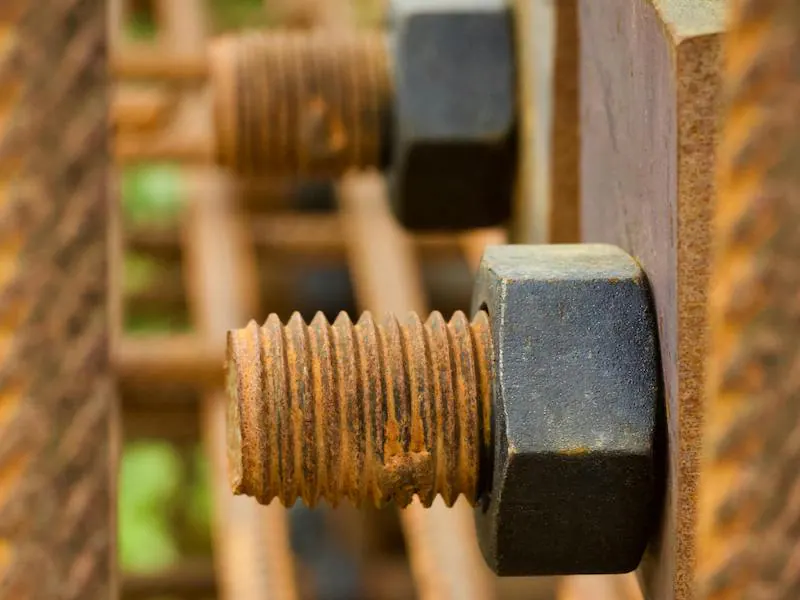
Why fastener failure is usually preventable
In marine and industrial environments, fastener failure is often treated as an unavoidable operational problem. However, most failures are predictable and preventable.
Incorrect material selection, poor environmental matching, thread incompatibility, and rushed procurement decisions are responsible for a large percentage of fastener-related issues across marine maintenance, ship chandlery, and industrial operations.
The challenge is that fasteners are usually a small line item on a project or repair. Because of that, they are often overlooked until something fails. When they do fail, the consequences are rarely small.
Fasteners fail long before they break.
A failed fastener is usually the final stage of a problem that started much earlier.
In marine environments especially, factors such as:
- Saltwater exposure
- Humidity
- Vibration
- Load stress
- Temperature changes
- Chemical exposure
all accelerate deterioration when the incorrect fastener is specified.
By the time visible corrosion or mechanical failure appears, the underlying issue has often been developing for weeks or months.
This is why experienced procurement and maintenance teams focus heavily on:
- Material compatibility
- Corrosion resistance
- Correct thread specification
- Proper coatings
- Environmental suitability
Common causes of fastener failure:
- Incorrect material selection
One of the most common mistakes is assuming that all stainless steel fasteners perform equally. Different environments require different materials.
For example:
- Standard stainless may perform adequately indoors
- Marine environments often require A4 stainless for improved corrosion resistance
- Galvanised fasteners may work well in certain industrial applications but underperform in aggressive saltwater exposure
Using the wrong material can lead to:
- Corrosion
- Seizing
- Reduced structural integrity
- Premature replacement cycles
2. Environmental mismatch
Fasteners should always be selected based on where they will operate.
A fastener exposed to:
- Salt spray
- Constant moisture
- Chemical washdown
- Outdoor vibration
will behave very differently from one used in a controlled indoor environment.
Marine operations are particularly unforgiving because corrosion accelerates rapidly once protective layers begin to fail.
This is why environmental understanding matters just as much as the fastener itself.
3. Thread and specification errors
Thread mismatches are more common than many people realise.
Issues often arise when:
- Metric and imperial systems are mixed
- Fine and coarse threads are confused
- Incorrect tolerances are used
- Replacement fasteners are sourced without full specification verification
Even small inconsistencies can create:
- Assembly delays
- Improper load distribution
- Damage during installation
- Reduced long-term reliability
In urgent repair environments, these mistakes become expensive very quickly.
4. Buying on price alone
Cheap fasteners often become expensive fasteners.
While fasteners may represent a small percentage of total project cost, failure can result in:
- Downtime
- Repeat labour
- Equipment damage
- Vessel delays
- Procurement inefficiencies
Experienced buyers understand that reliability, availability, and correct specification usually outweigh small unit-cost savings. The real cost is rarely the part itself.
Why availability matters
Even correctly specified fasteners become a problem if they are not available when needed. In marine and industrial environments, timing matters.
When vessels are in port, maintenance windows are short, or repairs are already underway, waiting days or weeks for stock can disrupt entire operations. This is why inventory depth is critical in technical supply.
Holding large, well-managed stock across thousands of SKUs allows urgent requirements to be fulfilled without compromising specification accuracy.
Preventing fastener failure
Reducing fastener-related issues usually comes down to a few consistent practices:
- Understand the Environment
- Always evaluate:
- Moisture exposure
- Corrosion risk
- Load conditions
- Temperature
- Chemicals
- Always evaluate:
before selecting materials.
- Verify specifications carefully
- Check:
- Thread type
- Material grade
- Coatings
- Dimensions
- Application suitability
- Check:
before ordering or installation.
Work with experienced suppliers: reliable technical supply is not just about selling products. It is about understanding applications, identifying risks and ensuring availability when operations are under pressure.
Final thoughts:
- Fastener failure is rarely random.
- In most cases, it is the result of preventable decisions made earlier in the process: incorrect specification, poor environmental matching, inadequate stock planning, pr procurement based purely on price.
In marine and industrial operations, small parts often carry large operational consequences.
Getting them right matters.
If your operation depends on reliable fastener and engineering supply, Topfast supports marine and industrial customers with dependable stock availability, technical understanding, and practical supply experience.
View this post on our Topfast LinkedIn page
Explore our extensive Fastener ranges online :
Nuts
Bolts
Anchors
Washers